ServicesAC Installation
AC Installation in Hayden
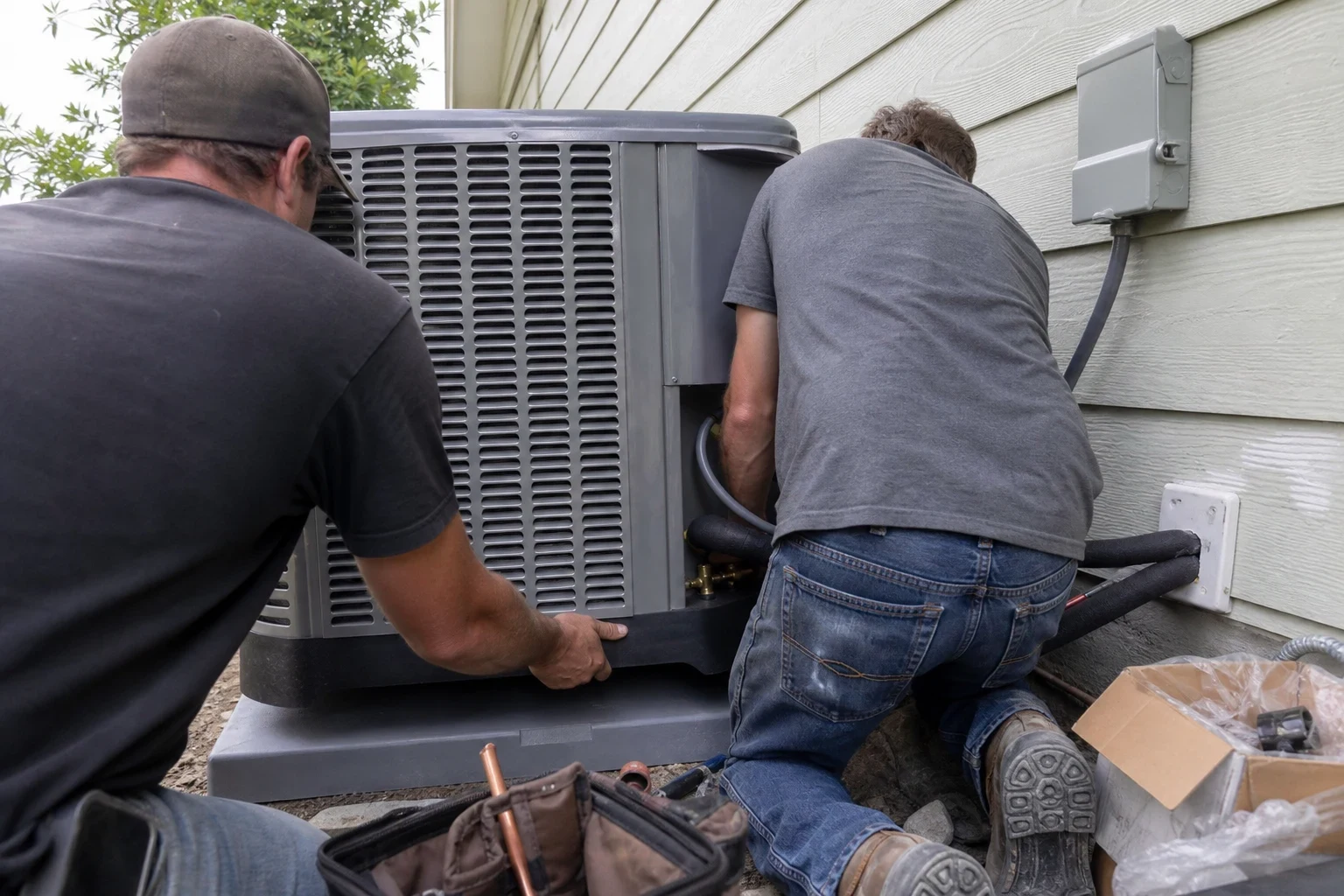
A new air conditioner is only as good as the way it goes in. We size it to your home, braze and pressure-test every joint, and set the charge by measurement. You get cool rooms, steady bills and a system built to last.
Repair or replace: how we help you decide
Plenty of AC problems are worth fixing, and when yours is one of them, we will say so plainly. Replacement starts to make sense when the unit is getting old, runs on a refrigerant that is no longer produced, or needs a compressor or coil that would eat up much of the price of new equipment. It also makes sense if your home has never had central air and you are done hauling window units in and out every summer.
Most early AC failures we see trace back to installation shortcuts: a unit sized by guesswork, a line set brazed without nitrogen, a vacuum pulled for ten minutes instead of verified. Those details are invisible on day one and expensive by year five. We take the extra time on them because they decide how long your system lasts.
We do not charge to come out, look at your home and price a new or replacement system. Before anyone picks up a tool, the full price is on paper in front of you.
What goes into every installation
A load calculation, not a guess
We measure your rooms, windows and insulation to find the size your home actually needs. Too much capacity cools in short bursts and never pulls the moisture out, so rooms feel damp. Too little keeps the unit running nonstop on hot days without ever catching up.
Matched outdoor and indoor parts
The condenser and the indoor coil have to be a rated pair. We match them so the system delivers the efficiency on its label.
Clean brazing and a real vacuum
We flow nitrogen through the copper while brazing so no scale forms inside the lines. Then we pressure-test for leaks and pull a deep vacuum, confirmed on a micron gauge, before any refrigerant goes in.
A charge set by measurement
We weigh in the refrigerant and check superheat or subcooling once the system runs. The right charge protects the compressor and keeps your bills where they should be.
A solid, level pad
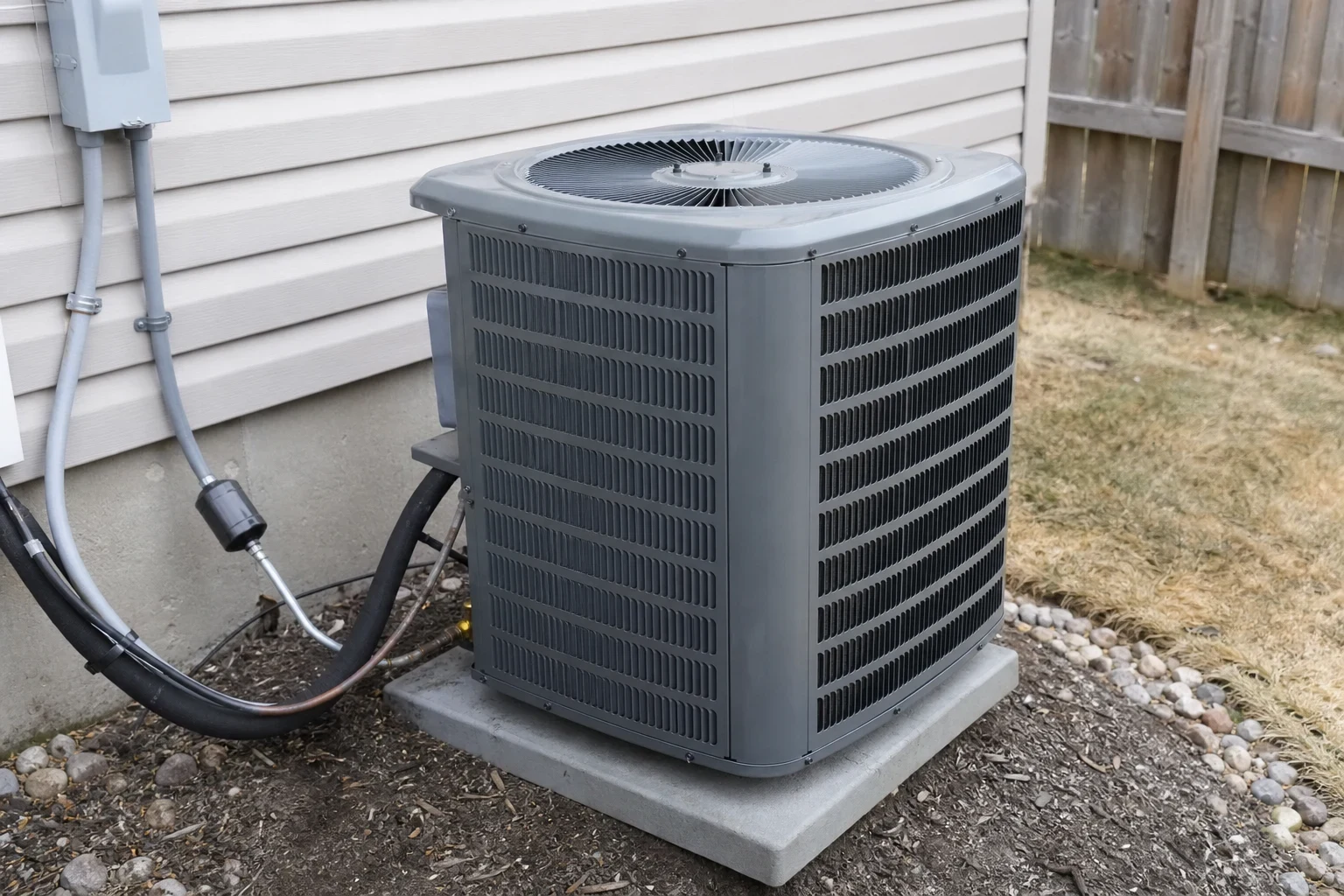
The outdoor unit sits level, raised and clear of shrubs and siding, with proper airflow around it. A pad that settles or tilts strains the compressor over time.
Drain, wiring and thermostat
We trap and slope the condensate drain, add a safety float switch where it fits, wire a proper outdoor disconnect and set up your thermostat. Before we leave, we walk you through how it all works.
Signs it is time to replace your AC
The system is 12 to 15 years old
Older units lose efficiency every season. When a big repair comes up on a system this age, replacement often costs less over the next few years.
It still runs on R-22
That refrigerant is no longer produced, so recharging a leaking system gets costly fast.
Repairs keep stacking up
If you have called for service two or three summers in a row, the money may be better spent on a new unit.
Rooms never feel cool
Some rooms stay warm, or the house feels sticky even with the AC running. A poorly sized or worn-out system is often the cause. On hot July afternoons, that gap is hard to ignore.
Your cooling bills keep climbing
Higher bills with no change in how you use the system usually point to a unit that is wearing out.
How installation day goes
- 1
Home visit and free estimate
We look at your current equipment, measure your home and talk about how you use each room. You get a written quote with the equipment and work spelled out line by line.
- 2
Permit and scheduling
We pull the mechanical permit where one is required and set an install date that works for you.
- 3
Careful removal and setup
We lay down floor protection, recover the old refrigerant properly and haul away the old unit. Then we set the pad, the condenser and the new coil.
- 4
Lines, testing and charge
We braze the line set under nitrogen, insulate it, seal the wall opening, then pressure-test, vacuum and charge. Most replacements finish in a single day.
- 5
Startup and walkthrough
We run the system, check temperatures and the drain, clean up, and show you the thermostat and filter. If an inspection is needed, we schedule it.
What affects the price of a new AC
Every home is different, so we quote after we have seen yours. The written quote lists each part of the job so you can see where the money goes. Nothing is added later without your say.
- System size
- The load calculation sets the tonnage. Larger homes need more capacity, and the right size costs less to run than the wrong one.
- Efficiency level
- Higher-efficiency and variable-speed units cost more up front and less each summer. We will explain the trade-off honestly for your home.
- Copper lines and outdoor location
- When the existing copper is the right size and in good condition, we can often keep it, which trims the bill. Putting the condenser in a new spot, or running fresh lines through finished walls, takes more hours.
- Electrical work
- An older panel or a missing disconnect may need updating to meet code.
- Indoor equipment
- The new coil sits on your furnace, so its age matters. When the furnace is also wearing out, doing a furnace installation alongside the AC means one crew visit and one permit instead of two.
AC installation questions
Something not covered here? (208) 834-9366
How long does an AC installation take?
Most straight replacements take one day. A home that has never had central air, or a job with electrical upgrades, can take a bit longer. We give you a realistic timeline in your quote.
Do I have to replace my furnace too?
Not always. The new coil sits on top of your furnace, so we check that the furnace blower can move enough air for the new system. If your furnace is old, we will show you both options and let you decide.
Should I get a heat pump instead?
It deserves a look. A heat pump cools your home in summer just like an AC, then reverses to provide heat through much of the year. Heat pumps can qualify for Avista rebates and federal tax credits, and we will walk you through claiming them. You will find more detail on the Heat Pumps page.
Can you install AC in a home without ducts?
Yes, through ductless mini-splits. They mount on the wall in each zone and need only a small opening to the outdoor unit. See our Ductless Mini-Splits page for how they work.
What upkeep does a new AC need?
Very little, but it adds up. Swap the indoor filter every one to three months and give the outdoor unit a couple of feet of open space on every side. A tune-up once a year lets us spot a worn part before it fails. Our maintenance plans include that visit along with priority scheduling.
Let's plan your new air conditioner
Give us a ring, tell us a little about your home and the system you have now, and we will find a time to come look. The estimate costs you nothing, and you will see every line of the price in writing before we start.