ServicesNew Construction HVAC
New Construction HVAC in Hayden
A new home gives you a clean slate for heating and cooling. We work out the equipment size from your drawings, put each unit where a technician can reach it, and finish every connection carefully so the system stays quiet and dependable for years.
Heating and cooling planned with the house
In a new home, most HVAC problems start on paper. A furnace sized by rule of thumb, a heat pump tucked into a corner nobody can reach, or a thermostat placed beside a sunny window will bother you for years. We work from your plans before walls go up, so the system fits the house you are actually building.
We install furnaces, central air conditioners, heat pumps and ductless mini-splits for new homes, and we fit our work around your builder's schedule. Your home has to handle freezing, snowy stretches and warm, dry summer afternoons, so we match the equipment to both seasons instead of oversizing it for one.
Before any work begins you get a written quote, and estimates are free on installations. You will know what equipment is going in and why we chose it.
What's part of our new construction work
Sizing room by room
Before choosing equipment, we calculate how much heat each room loses in winter and picks up in summer. Square footage, window sizes, insulation and the way the house faces all factor in, and that number decides the system size.
Guidance on the right system
We compare your choices side by side: a furnace with central air, an all-electric heat pump, a heat pump with gas backup, or ductless mini-splits. We explain the differences in comfort, operating cost and maintenance in plain terms.
Planning the rough-in
While the framing is still open, we settle where equipment goes and how gas, venting, condensate drains and refrigerant lines will run. Doing it now saves cutting into finished drywall later.
Trim-out and setup done carefully
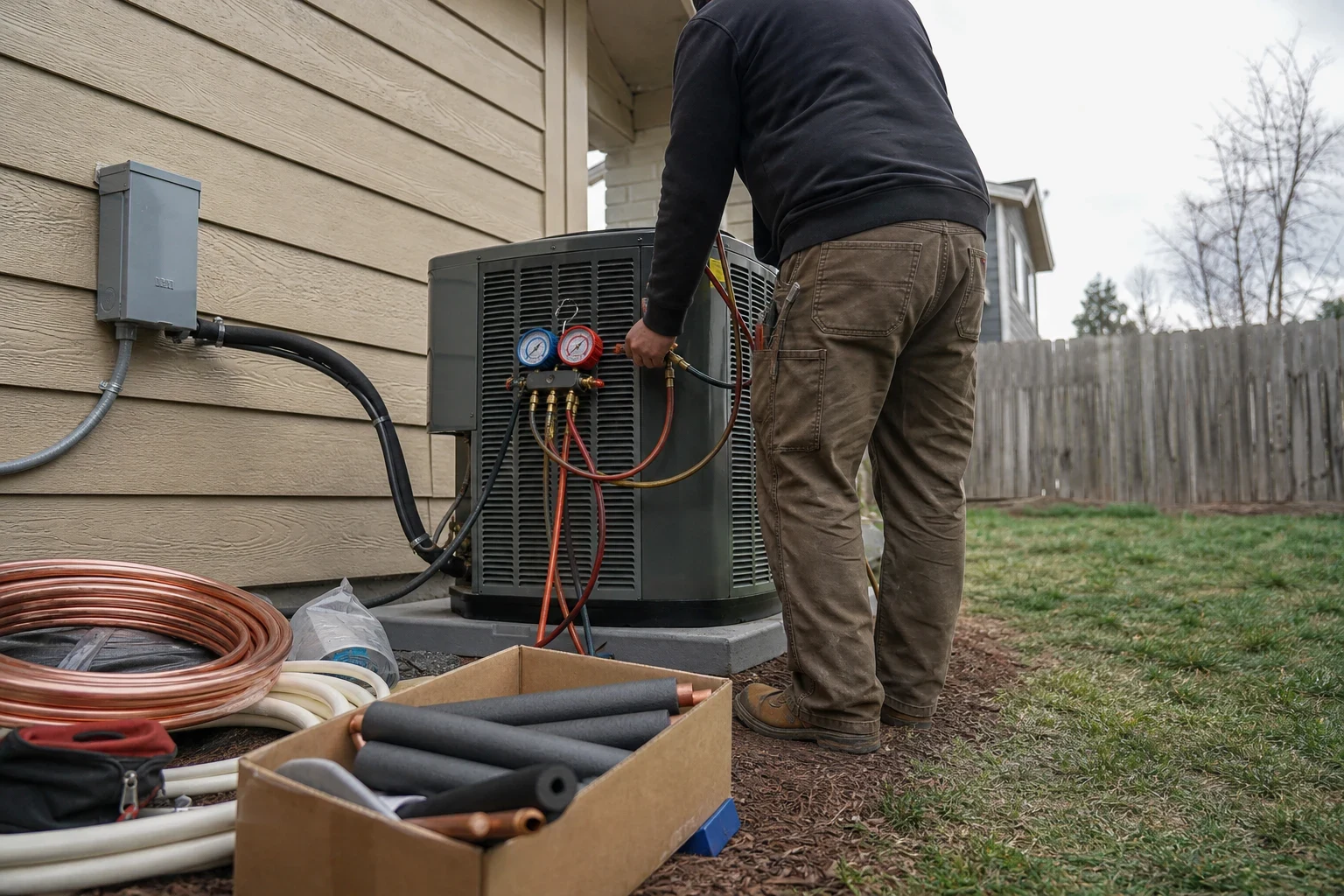
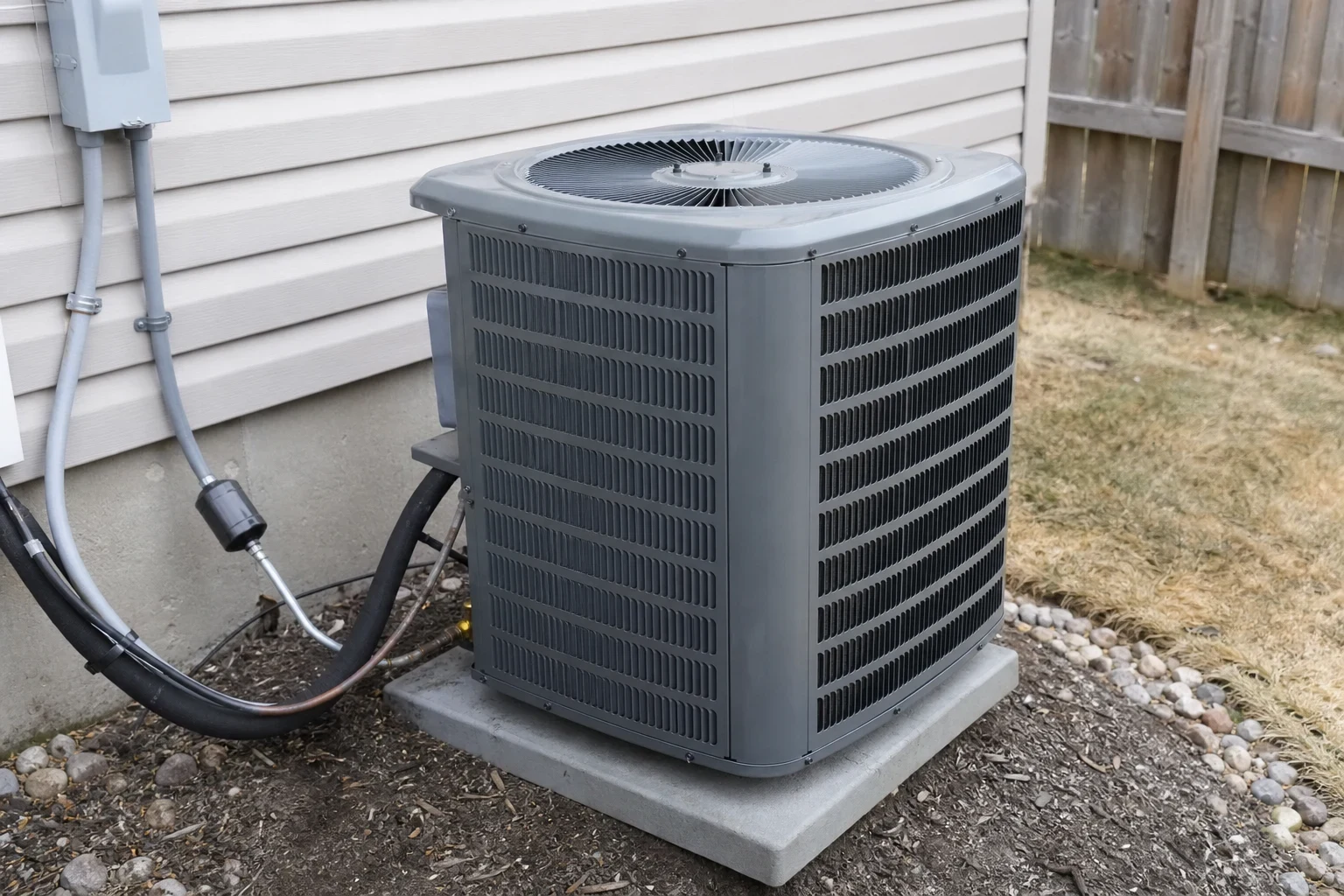
Outdoor units sit on level pads, clear of walls and above the snow line. We braze refrigerant lines under nitrogen, pull a deep vacuum and charge to the manufacturer's specs instead of going by feel.
Start-up and orientation
We start the system, check temperatures and operation, and show you the thermostat, filter and shutoffs before you move in.
When to bring us into your build
Your plans are nearly final
This is the best time to call. Equipment sizing and placement are easy to adjust on paper and costly to change once framing is done.
You are weighing a heat pump
How well a heat pump handles cold weather comes down to the right model and size. We can talk through the choices before you commit, and we will walk you through claiming the Avista rebates and federal tax credits available for heat pumps.
Your builder needs an HVAC partner
If your general contractor is lining up trades, we can work from their schedule and plans so rough-in and trim-out happen on time.
You are adding an ADU or detached space
A shop apartment, garage suite or guest house often suits ductless mini-splits. We can size and install them as part of the same project.
The proposed system feels like a guess
If a bid lists equipment without explaining how it was sized, ask for a second look. We are glad to review it and tell you honestly what we see.
From drawings to move-in day
- 1
A phone call and your plans
Start with a call. We talk about your floor plan, the rooms you care most about and your budget, then run the load calculation and put the equipment and scope in a written quote.
- 2
Permit and timing
We pull the mechanical permit and book our visits around your builder's calendar, so other trades are not left waiting on us.
- 3
Work while the walls are open
We mark where each unit sits, run gas and venting, and route refrigerant lines and condensate drains. Everything is ready when the inspector comes for the rough-in check.
- 4
Final setup
Once drywall and finishes are done, we set the units, make the last connections, charge the system and start it. We watch it run under real conditions and see it through final inspection.
- 5
Handing over the keys to your system
We show you how everything works, register the equipment with the manufacturer and leave the site clean behind us.
What moves the HVAC price on a new build
No two builds match, so we quote from your plans instead of using a flat rate. Equipment and labor appear as separate lines on the written quote, which makes it simple to compare with other bids. These are the factors that change the price most.
- House size and floor plan
- Square footage only tells part of the story. Tall ceilings, an upper floor and big windows facing west all shift the capacity the house calls for.
- Type of system
- Furnace with AC, heat pump, gas-and-electric hybrid or mini-splits: each comes with its own equipment and labor cost. A heat pump may qualify for rebates and tax credits that cover some of it.
- Efficiency and features
- Variable-speed and higher-efficiency equipment costs more up front and less to run. We show you where the payback makes sense for your home.
- Gas, venting and electrical
- Extra work comes with long gas runs, sidewall vents or a larger circuit to power a heat pump.
- Build timeline
- Delays that force return trips, or changes after rough-in, mean more labor. Planning ahead keeps that cost low.
Common questions about HVAC for a new build
Something not covered here? (208) 834-9366
At what stage of building should we get you involved?
Ideally once the floor plan is mostly settled and before framing starts. That leaves room to size the system properly and pick spots for each unit while it is still easy. We can join a project later too, though moving things after the walls close adds cost.
Do you work with my builder or directly with me?
Either. Many homeowners bring us in and we coordinate with their general contractor, and some builders hire us directly. In both cases we keep everyone working from the same plan.
Is a heat pump a good choice for a new home here?
For many new homes, yes. Today's cold-climate models keep up through most winter weather, and some owners add a gas furnace as backup for the deepest cold snaps. We can show you which rebates and tax credits your heat pump may qualify for and how to claim them.
Why does the load calculation matter so much?
An oversized system short-cycles, leaves rooms clammy and wears out faster. An undersized one runs nonstop on cold mornings. Sizing from your actual plans avoids both problems.
What if something needs adjusting after we move in?
Give us a call and we will come back and take a look. The first full season in a new house sometimes shows a room that runs a little warm or cool, and small setting changes usually sort it out.
Start your new home's comfort on paper
Give us a call with your plans in hand and we will talk through sizing, equipment and timing. You will get a written quote before any work begins.